






The Quiet Rise of Middle Powers: How Secondary States Are Reshaping Global Diplomacy
Global Diplomacy | October 4, 2026

For much of the postwar era, international affairs was framed as a story of great powers: Washington and Moscow, later joined by Beijing, set the tempo while everyone else followed. That framing is becoming obsolete. A cluster of middle powers — Turkey, Indonesia, South Africa, Brazil, Saudi Arabia, Vietnam, and others — is increasingly behaving not as spectators but as architects, shaping outcomes on issues from energy to mediation to the governance of emerging technologies.
What unites these states is not ideology but a shared interest in strategic autonomy. They want to keep their options open, avoid being conscripted into blocs, and extract maximum benefit from a multipolar order. This is not neutrality in the classical sense. It is active, transactional, and often highly creative diplomacy.
Mediation as a Growth Industry
The most visible expression of this shift is mediation. Turkey helped broker the Black Sea grain deal. Qatar has served as a channel between Western capitals and the Taliban. Indonesia has positioned itself as a bridge in Southeast Asian disputes, while Brazil and China jointly floated peace proposals for Ukraine. These efforts do not always succeed, but their proliferation signals something important: the assumption that only great powers can convene, guarantee, or enforce agreements is eroding.
Middle powers bring certain advantages to the table. They are often less threatening to the parties in a conflict, more agile institutionally, and more willing to talk to everyone. Their diplomats tend to have deep regional knowledge and long-standing personal networks. In a world where trust is scarce, that matters.
Economic Statecraft Without Hegemony
Economic tools once monopolized by large economies are also being repurposed. Indonesia leveraged its nickel reserves to attract battery investment and move up the value chain. Saudi Arabia and the UAE are using sovereign wealth to diversify beyond hydrocarbons and to buy influence in sports, technology, and logistics. Vietnam has quietly become a manufacturing hinge between China and Western markets, benefiting from both without formally aligning with either.
This economic statecraft is not about replacing the dollar system or building a rival order. It is about hedging, optionality, and leverage. Middle powers are discovering that in a fragmented world, the ability to be useful to multiple camps is itself a form of power.
What This Means for the Great Powers
For Washington, Beijing, and Brussels, the rise of middle powers is a mixed blessing. It creates opportunities for burden-sharing and coalition-building, but it also imposes constraints. Policies that once could be dictated now must be negotiated. Sanctions regimes become leakier. Technology standards become contested. Alliances become more conditional.
The smart response is not to try to force these states back into line but to understand their incentives. Middle powers will cooperate where interests converge and defect where they do not. That is not a crisis of the international order; it is what a genuinely multipolar system looks like.
The East Wind Post will continue to track how these states position themselves in the coming years. If the past decade is any guide, the most consequential diplomatic moves may not come from the loudest capitals, but from the ones quietly building the bridges everyone else will eventually need to cross.
-
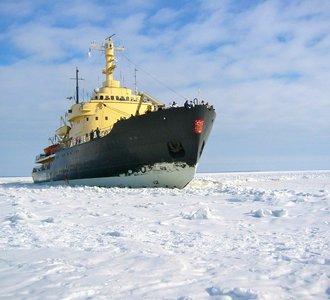
The Arctic Frontier: Russia, China, and the Contest for the Northern Sea Route
Aug 28, 2026Regional Analysis

-
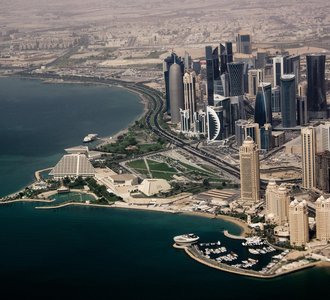
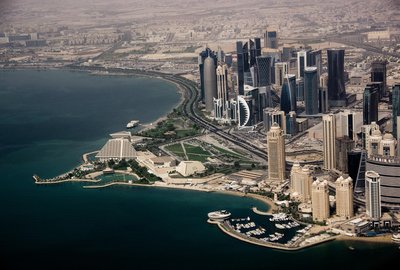
The Gulf's Diplomatic Offensive: From Regional Rivalry to Global Broker
Sep 13, 2026Resources and Geopolitics

-
The Arctic Frontier: Russia, China, and the Contest for the Northern Sea Route
Sep 20, 2026Regional Security

-
Japan's Quiet Military Transformation: Rearmament, Alliances, and the Ghost of Article 9
Sep 10, 2026Defense Policy

-
The New Silk Road of Ideas: How China's Universities Are Reshaping Global Education
Sep 14, 2026Soft Power

-
The Water Wars That Never Happened: Cooperation and Conflict in the Mekong Basin
Sep 16, 2026Resource Politics

-
The Diplomacy of Debt: How China's Lending Is Reshaping Global Governance
Sep 4, 2026Global Economy

-
The Quiet Rise of Middle Powers: How Secondary States Are Reshaping Global Diplomacy
Sep 18, 2026Global Diplomacy

-
Beyond the Belt and Road: China's Digital Silk Road and the New Infrastructure Race
Sep 17, 2026Eastern Hemisphere Relations

East Wind Post

China's overseas digital infrastructure push is reshaping connectivity, standards, and influence across Asia, Africa, and Latin America — and raising hard questions for everyone else.