






The Arctic Frontier: Russia, China, and the Contest for the Northern Sea Route
Regional Security | September 19, 2026
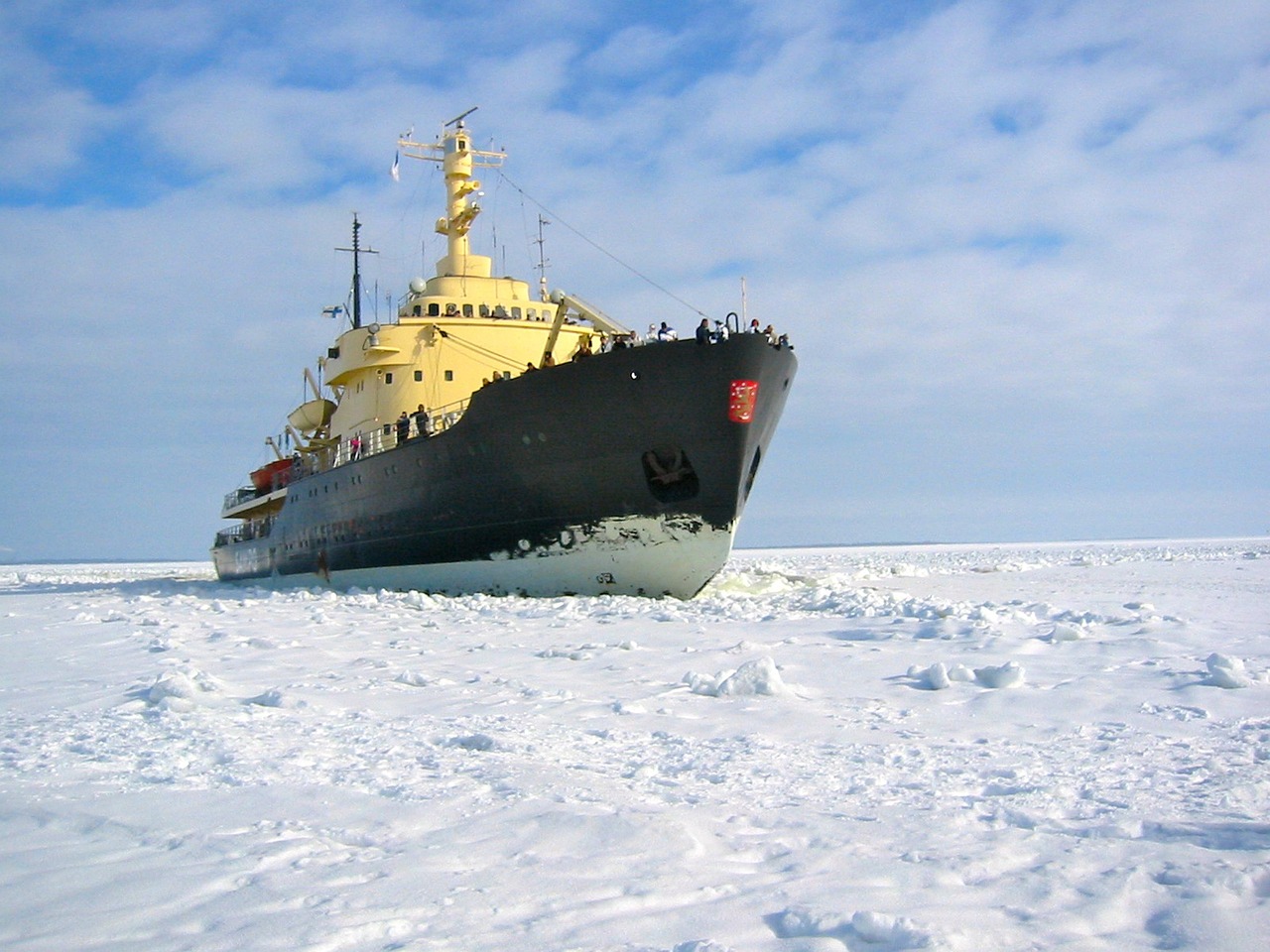
The Arctic was once a frozen periphery of world affairs, a place of scientific outposts and quiet military installations. Today it is a stage for some of the most consequential geopolitical maneuvering of the century. At the center of this shift is the Northern Sea Route, a maritime corridor along Russia's Arctic coast that Moscow has declared a national priority and that China has quietly embraced as part of its broader polar ambitions.
For Russia, the Northern Sea Route is not merely a shipping lane. It is a sovereign asset, a source of revenue, and a strategic buffer. Moscow has invested heavily in icebreaker fleets, port infrastructure, and military bases along the route. The Kremlin views control over the passage as essential to its claim as an Arctic great power, especially as Western sanctions push it to redirect energy exports eastward. The route shortens the distance between Europe and Asia by thousands of nautical miles, and Russia intends to profit from every vessel that transits it.
China, meanwhile, has described itself as a "near-Arctic state," a formulation that raises eyebrows in capitals from Oslo to Ottawa. Beijing has funded research stations, partnered with Russian energy projects, and quietly expanded its icebreaker program. For China, the Arctic represents a future trade artery that could reduce dependence on the Strait of Malacca and other chokepoints. But its growing presence also raises questions about whether economic cooperation with Moscow could evolve into a de facto strategic partnership in the High North.
The NATO Response and the Limits of Cooperation
NATO has responded to these developments with a mixture of caution and resolve. Norway, Denmark, and Canada have all increased Arctic surveillance and military exercises. The United States has reopened a strategic dialogue on the region and pushed for greater allied coordination. Yet the Arctic remains a place where cooperation and competition coexist uneasily. The Arctic Council, long a model of circumpolar collaboration, has been strained by the broader collapse of Western-Russian relations.
What makes the Arctic so volatile is the interplay of legal ambiguity and strategic ambition. The United Nations Convention on the Law of the Sea provides a framework for maritime claims, but the pace of climate change is outpacing the slow grind of international legal processes. New shipping lanes, fishing grounds, and resource deposits are becoming accessible faster than rules can be agreed upon. This gap between reality and regulation is where friction builds.
Implications for the Eastern Hemisphere
For Asia, the Arctic is no longer a distant curiosity. Japan and South Korea have both pursued observer status in Arctic forums and invested in ice-capable research vessels. India has published an Arctic policy and eyes the region for scientific and commercial opportunities. The Northern Sea Route could one day reshape supply chains that currently run through the Indian Ocean and the South China Sea, with profound consequences for trade, energy security, and naval strategy.
The Arctic is not yet a zone of open conflict, but it is becoming a zone of open competition. The question for policymakers in Beijing, Moscow, Washington, and the capitals of Europe is whether the region will be governed by rules and cooperation or by the logic of spheres of influence. The answer will shape not only the future of the High North but also the broader architecture of international order.
-
The Diplomacy of Debt: How China's Lending Is Reshaping Global Governance
Sep 9, 2026Resources and Geopolitics

-
The Diplomacy of Debt: How China's Lending Is Reshaping Global Governance
Sep 9, 2026Regional Security

-
The Quiet Rise of Middle Powers: How Secondary States Are Reshaping Global Diplomacy
Oct 3, 2026Defense Policy

-
Beyond the Belt and Road: China's Digital Silk Road and the New Infrastructure Race
Sep 4, 2026Soft Power

-

-

-
The Gulf's Diplomatic Offensive: From Regional Rivalry to Global Broker
Sep 23, 2026Global Diplomacy

-
The Arctic Frontier: Russia, China, and the Contest for the Northern Sea Route
Sep 7, 2026Eastern Hemisphere Relations

-
Japan's Quiet Military Transformation: Rearmament, Alliances, and the Ghost of Article 9
Sep 28, 2026Regional Analysis

East Wind Post

Japan is shedding decades of military restraint, and its neighbors are watching every step with a mixture of anxiety and calculation.